



The world is becoming ever more oligarchic. As private capital increasingly wields control over essential infrastructure, Silicon Valley’s expanding political influence is forging a new hybrid class of corporate/state rulers.
Nowhere is this more evident than in the case of Elon Musk. This week he became the world’s first trillionaire thanks to SpaceX’s IPO, with the company trading at a valuation of nearly $1.8 trillion after investors around the world suffered serious investment “FOMO.” Musk is likely to continue to use his growing political-economic power to keep advancing a global far-right agenda.
Space, it turns out, is a big part of the story of how Musk came to wield such outsize power.
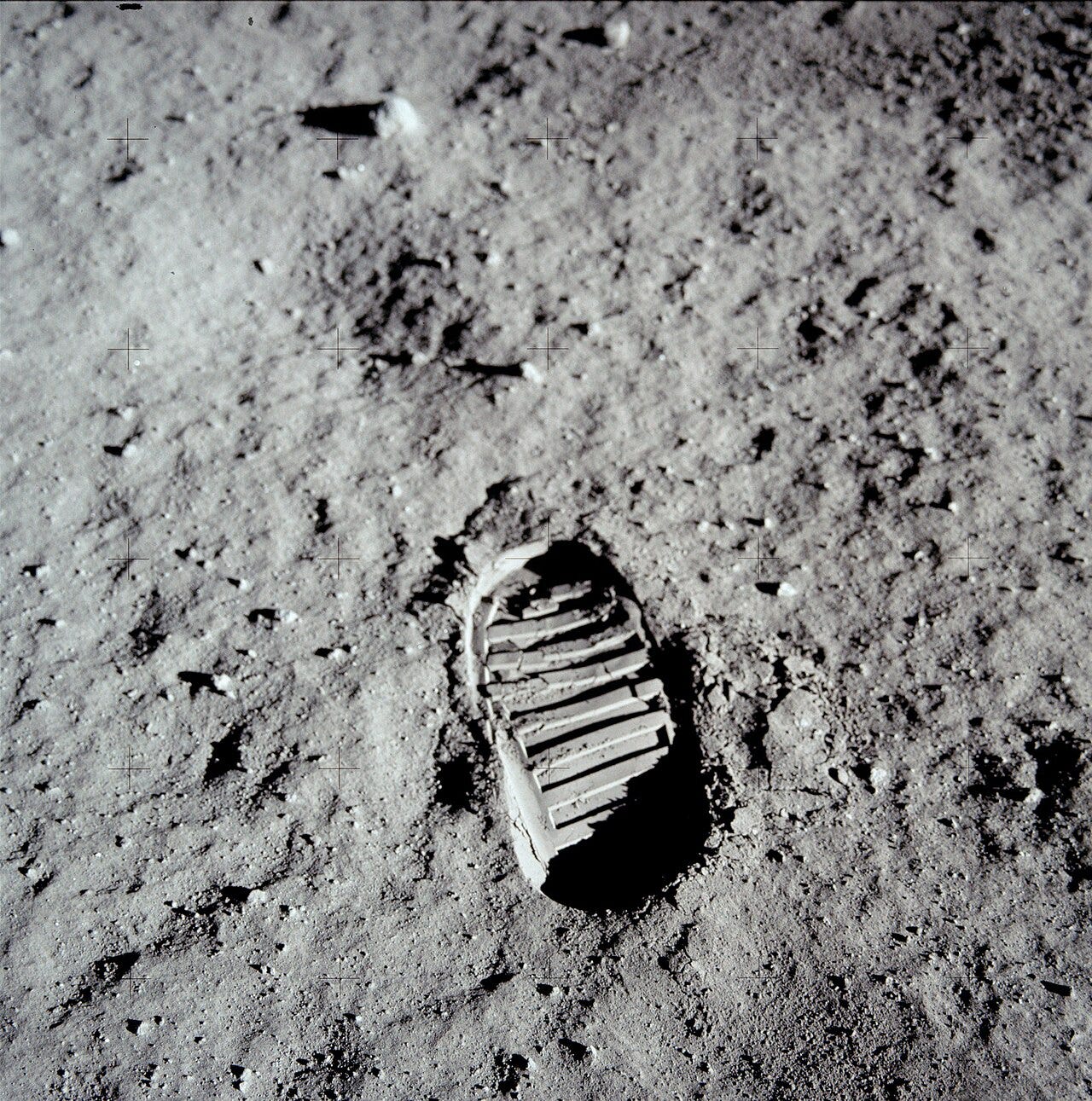
Some years ago, a colleague and I coined the term capitalistkind to describe the commercialized turn in spaceflight. Where Neil Armstrong had once proclaimed “one giant leap for mankind,” the new space entrepreneurs—Musk, Bezos, Branson—were looking to undertake some giant leaps of their own, only now for their own private companies and pocketbooks. The universalist packaging, with promises of humanity becoming a “multiplanetary species” in Musk’s vision, and with space tourism said to be within reach, was more PR than reality. More rocket launches meant more emissions on an already overheating planet—ironically hastening the very doomsday scenarios Musk claimed to be hedging against—and the costs of space tourism practically guaranteed it would remain reserved for a super-rich elite. It wasn’t so much “humankind” that was advancing into space, but a narrow circle of wealthy capitalists embellishing their activities with rousing universalistic rhetoric.
Since our 2019 paper, the privatization of space activities has only intensified. Last year, SpaceX conducted around 165 orbital launches—roughly 85 percent of all U.S. launches, or half of all launches worldwide. Its Starlink “mega-constellation” comprises around ten thousand active satellites, or two-thirds of all active satellites. Researchers at the University of Washington have recently asked, quite rightly, whether Starlink now in fact “occupies” low Earth orbit.
And Musk wants to go much farther: SpaceX’s S-1 filing with the SEC claimed to have identified a market worth $28.5 trillion, with $26.5 trillion of that in AI activities. “Orbital AI”—essentially launching computational processing into orbit, powered by the sun (though brought there on emissions-spewing rockets)—is becoming a big part of the SpaceX narrative. Elon Musk wants it all: AI, space, electric vehicles, neural processing, social media; in short, the trappings of an “everything company” wielding multiple interlocking forms of economic, technological, and therefore, political power.
In a forthcoming chapter, I describe Musk’s SpaceX as an illustrative case of oligarchic infrastructure: the widening of private control over state-critical infrastructure, which can then be leveraged for political influence. The U.S. has in effect made itself heavily dependent on Musk and his company, which in turn provides the now-trillionaire with significant power.
The sociologist Michael Mann described the modern state’s infrastructural power: its capacity to control and coordinate society through everything from taxation to roads and railways, power lines, and more. Farrell and Newman have written about how states can exercise “chokepoint” power in controlling basic infrastructure, from Internet relays to financial networks like SWIFT. Musk, however, illustrates something like the privatized inversion of those ideas: Oligarchic infrastructure is the conversion of private control over essential hardware into political power, emblematic of what a group of scholars have recently termed “oligarchic sovereignty.”
The problem, of course, is that corporations and their owners are inherently nondemocratic entities; modern liberal-democratic states are at least formally subject to systems of public regulation, accountability, and democratic control. Privatizing and concentrating ownership of essential infrastructure therefore dilutes and diminishes democracy.
Musk’s dominance in space is only one element in his wider circuit of personalistic power. The social media company X, bought for $44 billion, serves as a political influence machine; Bloomberg found Musk was the single most important disseminator of anti-immigration conspiracy theories on X ahead of the 2024 election. Meanwhile, Musk’s $288 million in pro-Trump campaign donations bought him a foothold inside the White House. Through DOGE, Musk helped implement drastic cuts to multiple federal agencies, including USAID, with likely lethal effects at a scale of “hundreds of thousands of deaths”—in tandem with SpaceX winning a multibillion-dollar contract from the Pentagon. His later public feud with Trump, more performative than substantial, seems to have changed little about the underlying configuration of Musk’s power.
We got a glimpse of this power when, following Russia’s full-scale invasion of Ukraine, Starlink connectivity failed during a Ukrainian attack on the Russian Black Sea Fleet in 2022. Walter Isaacson’s Musk biography first reported that Musk had ordered coverage turned off within 100 km of Crimea, a claim Isaacson later retracted; Musk said Starlink had never been enabled in the area in the first place. The episode shows how much geopolitical power a single private actor can wield. Starlink, as one recent Foreign Policy essay put it, has “privatized geopolitics.”
Recently, Quinn Slobodian and Ben Tarnoff coined the term “Muskism” to capture elements of this political-economic moment. Musk has long sold the fantasy of techno-sovereignty, but this sovereignty is largely illusory. As Slobodian and Tarnoff write, “Trying to unplug from Musk, you realize he owns the socket.”
Musk’s oligarchic power in space is being aided by a U.S.-led rewriting of the rules governing space. The 1967 UN Outer Space Treaty declared that space was the “province of all mankind,” intended to be used “for the benefit and in the interests of all countries”—a kind of benevolent social democracy in space, stemming from the political possibilities of the 1960s. The framework looked secure for more than half a century for the simple reason that space remained relatively inaccessible to capital: the idea of a commons in space was easy to uphold so long as there was nothing, effectively, to enclose. No longer. A 2020 Trump executive order stated outright that the U.S. “does not view [outer space] as a global commons,” and the U.S.-led Artemis Accords have paved the way for private resource extraction while claiming to remain within the bounds of the UN framework that the accords are, in effect, displacing. Marx would likely have described this as an enclosure of the commons, a familiar refrain in the history of capitalism.
As investors have flocked to invest tens of billions of dollars in SpaceX’s IPO, they are helping solidify Musk’s grasp on the essential hardware that increasingly runs our world, both on and off Earth. With Musk’s newly minted trillionaire status and growing space power, what is emerging is a techno-military-geopolitical complex in which the hybridization of state and capital blurs the line between public and private. It is no longer quite clear where U.S. interests end and Elon Musk’s begin. We may all live to regret it.
One day people will look at this moment where the elite tried to privatise the universe as akin to King Canute commanding the tide (only with far less self-awareness than old Canute).